We readily accept that the body can fall ill and, with care, recover. The mind is no different, yet conditions such as anxiety, depression, obsessive compulsive disorder and bipolar disorder are still too often met with fear, silence or blame. This article offers a simple, compassionate introduction to some of the most common mental health conditions, describing what they can look like, what tends to cause them, and where help can be found. Drawing on data and guidance from the World Health Organization, work on the age at which such conditions often begin by Kessler and colleagues, and research on stigma by Corrigan and Watson, it treats these conditions as what they are: real, common and treatable health conditions, not character flaws. Overall, it argues that understanding replaces fear, and that with the right support the mind, like the body, can heal. Please note that this article is educational and is not a tool for self diagnosis.
Keywords: mental health conditions, anxiety, depression, OCD, bipolar disorder, stigma, help seeking, recovery
Introduction
If someone we love developed a heart condition or diabetes, we would not tell them to simply try harder or to snap out of it. We would encourage them to see a doctor, and we would stand beside them while they got better. Somehow, when the illness is in the mind rather than the body, our response often changes. We fall silent, or we judge, or we look away.
This article is a gentle invitation to change that response. The mind, like the body, can struggle. And the mind, like the body, can heal. Here we will look plainly and kindly at what mental health conditions are, what tends to cause them, what a few of the most common ones can feel like, and where help can be found, so that fear can give way to understanding.
What is a mental health condition?
A mental health condition is a health condition that affects how a person thinks, feels or behaves, in a way that causes real distress or makes daily life harder. It is not a sign of weakness, a lack of willpower or a personal failing, any more than asthma or a broken bone would be.
These conditions are also far more common than many people realise. The World Health Organization estimates that in 2021, nearly one in seven people around the world, about 1.1 billion, were living with a mental disorder, with anxiety and depression the most common (World Health Organization, 2025). In other words, whether or not we talk about it, mental health conditions touch almost every family and workplace. They also often begin early in life. Research suggests that about half of all such conditions have their onset by the mid teens (Kessler et al., 2005).
What causes them?
There is rarely a single cause. Mental health conditions usually arise from a combination of factors that interact with one another. These include biological factors, such as genetics and brain chemistry, psychological factors, such as thinking patterns and past experiences, and social factors, such as stress, loss, trauma, isolation or difficult circumstances.
This is why blaming a person, or their family, for a mental health condition is both unfair and unhelpful. No one chooses to develop anxiety or depression, just as no one chooses to develop migraines. Understanding the many roots of these conditions helps us respond with care rather than judgement, and it points toward the many ways they can be helped.
A closer look at four common conditions
The descriptions below are brief and simplified, meant only to build understanding. They are not a checklist for diagnosing yourself or anyone else. Only a qualified professional can make a diagnosis, and the same symptom can have many explanations.
Anxiety conditions involve worry or fear that is persistent, excessive and hard to control, often out of proportion to the situation, and lasting long enough to interfere with everyday life. It is more than the ordinary nervousness we all feel at times.
Depression is different from passing sadness. During a depressive episode a person may feel a low or empty mood, or a loss of interest and pleasure in things they used to enjoy, for most of the day, nearly every day, for at least two weeks, often alongside changes in sleep, appetite, energy and self worth (World Health Organization, 2025).
Obsessive compulsive disorder, or OCD, typically involves unwanted, distressing and repetitive thoughts, called obsessions, and repeated actions or mental rituals, called compulsions, performed in an attempt to ease the distress. It is far more than simply liking things tidy.
Bipolar disorder involves marked shifts in mood and energy over time, between depressive periods and periods of unusually high or elevated mood and activity, known as manic or hypomanic episodes. Worldwide, an estimated thirty seven million people, roughly one in two hundred, live with bipolar disorder (World Health Organization, 2025).
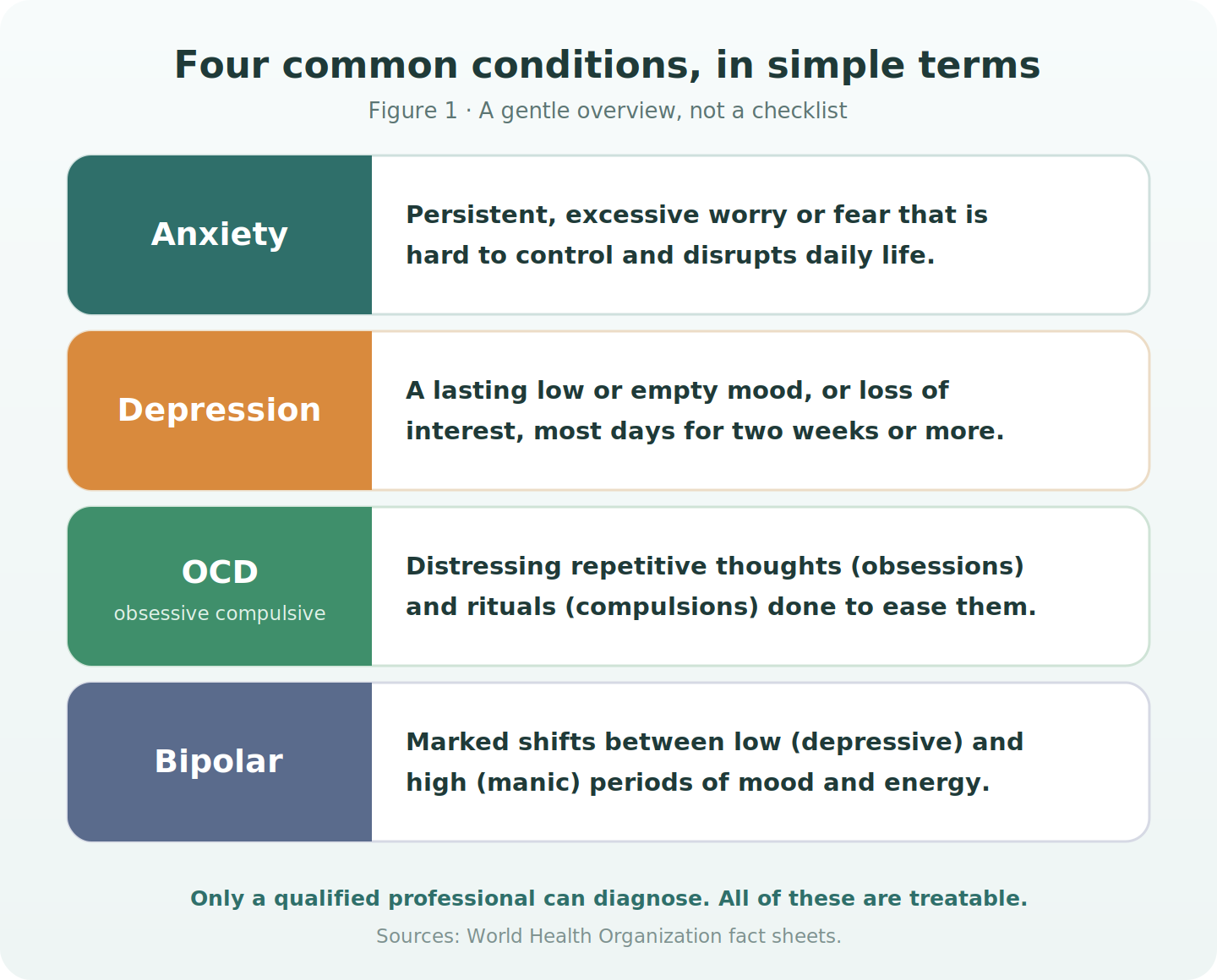
Figure 1. Four common conditions, in simple terms. Only a qualified professional can diagnose, and all are treatable.
The weight of stigma
Alongside the symptoms of a condition, many people carry a second, invisible burden: stigma. Researchers describe two forms of it. Public stigma is the prejudice and misunderstanding held by others, and self stigma is what happens when a person turns those same judgements inward and begins to believe them (Corrigan & Watson, 2002). Both can be as painful as the condition itself, and both can stop a person from reaching out for help.
Stigma is why so many suffer in silence. It is also something each of us can help to soften, and one of the simplest ways is through the words we use. Speaking of a person with a mental health condition, rather than defining them by it, and choosing everyday language with care, quietly restores dignity and makes it a little safer for others to seek help.
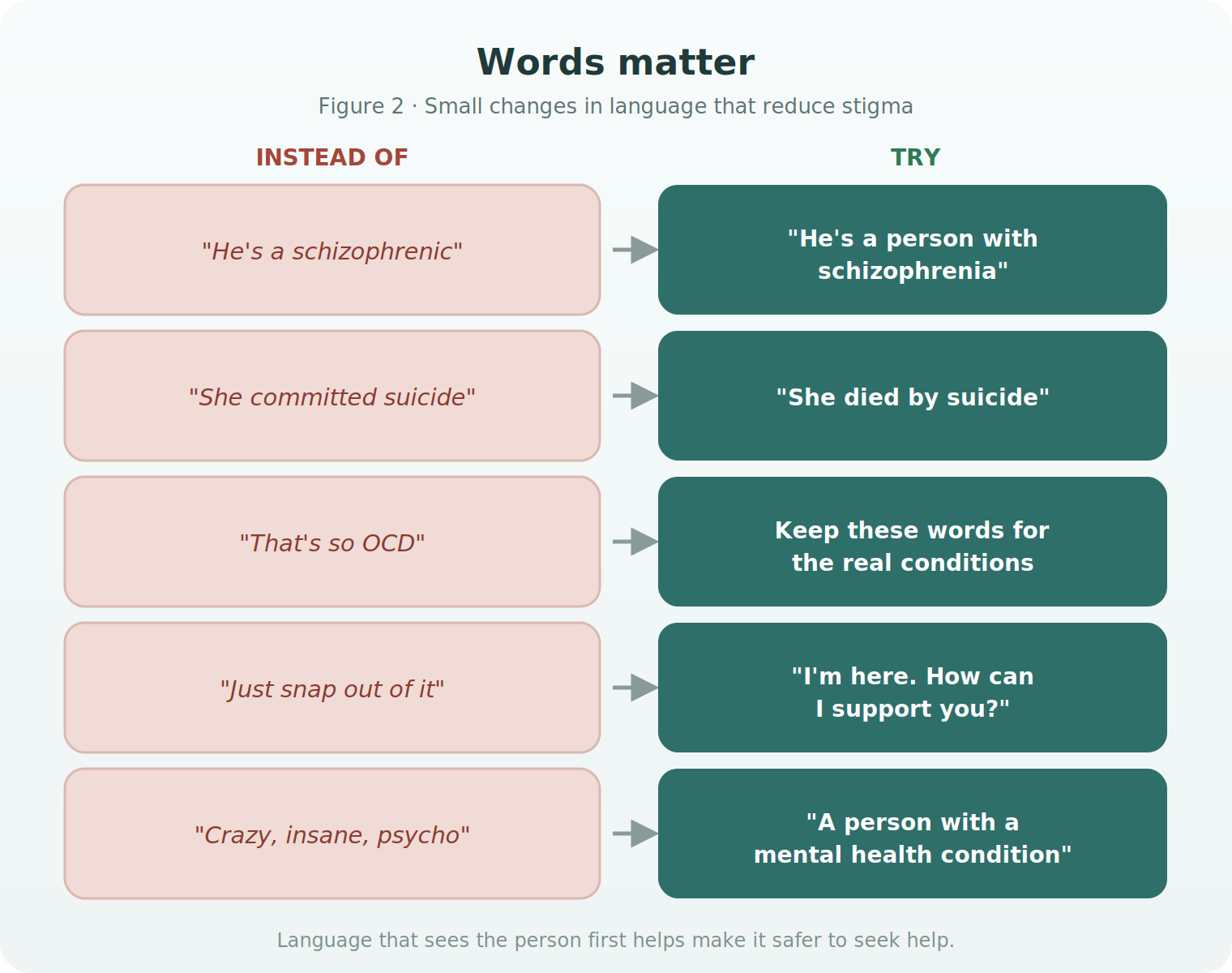
Figure 2. Words matter. Small changes in language can reduce stigma and invite openness.
Where to find help
The most important message of this article is also the most hopeful one: these conditions are treatable, and support is available. Help can begin with a family doctor, who can listen, rule out other causes and point the way forward. It can involve a psychologist or counsellor, who offers talking therapies, or a psychiatrist, a medical doctor who can assess and, where helpful, prescribe medication. Many people benefit from a combination, along with the support of family, friends and community.
Reaching out early tends to make recovery easier, yet across much of the world most people with mental health conditions still do not receive the care that could help them (World Health Organization, 2025). If you recognise yourself or someone you love in these pages, please know that asking for help is not a last resort or a sign of failure. It is the first and bravest step toward feeling better.
When to seek professional support
It is worth speaking with a qualified professional when difficult thoughts, feelings or behaviours persist for weeks rather than days, when they interfere with sleep, work, studies or relationships, when they feel overwhelming or out of your control, when you find yourself withdrawing from life, or whenever you have any thoughts of harming yourself. You do not need to wait until things feel unbearable to deserve support. Struggling is reason enough.
The SADHNAM Perspective
Behind every diagnosis there is a whole human being, deserving of the same dignity and care as anyone else. Alongside evidence based treatment, gentle practices such as mindful awareness, self compassion and steady daily rhythms can support wellbeing and recovery. We want to be clear that such practices are a companion to professional care, not a substitute for it, and they can never replace therapy or medication where these are needed. At SADHNAM we hold that meeting the suffering mind, our own or another's, with understanding rather than fear is itself a quiet form of healing.
A reflection from the Bhagavad Gita
"Panditah sama-darshinah" (Bhagavad Gita 5.18) This line is often interpreted as describing the wise as those who look upon all beings with an equal eye, seeing the same essential worth in everyone regardless of outer difference. It belongs to a spiritual and philosophical tradition rather than to psychological science, and it does not prove any modern theory. Yet its vision of equal dignity for all resonates gently with the effort to see a person, and not a label, in anyone living with a mental health condition. Rather than presenting scripture as scientific evidence, we offer it here as a philosophical reflection that may enrich personal understanding.
A Moment of Practice
The two minute SADHNAM exercise. A short practice you will find at the close of every article in this series. This week, a simple breath awareness.
- Sit comfortably and let your breathing be exactly as it is, with no need to change it.
- Gently rest your attention on the feeling of the breath, perhaps at the nostrils or in the rise and fall of the belly.
- When your mind wanders, and it surely will, simply notice that it has, and kindly guide your attention back to the breath.
- Continue for about two minutes, treating each return to the breath not as a failure but as the practice itself.
This is a small act of steadiness, not a cure. It gently trains the mind to return, again and again, with patience rather than harshness, which is a kindness we can carry into the rest of our lives.
Key messages
Key Messages
- Mental health conditions are real, common and treatable, not character flaws.
- They usually arise from many interacting factors, so blame has no place.
- Anxiety, depression, OCD and bipolar disorder each have recognisable patterns, but only a professional can diagnose.
- Stigma is a second burden, and the words we choose can help lift it.
- Help is available, and reaching out early makes recovery easier.
- Struggling is reason enough to seek support; you need not wait for a crisis.
Questions for reflection
Take a quiet moment with these. They are meant not to test you but to encourage understanding and compassion.
- What beliefs about mental illness did I grow up with, and do they still serve me?
- How do I usually respond when someone shares that they are struggling?
- Is there language I use casually that I might choose more kindly?
- If I needed support, would I feel able to reach out, and if not, what holds me back?
References
Corrigan, P. W., & Watson, A. C. (2002). Understanding the impact of stigma on people with mental illness. World Psychiatry, 1(1), 16–20.
Kessler, R. C., Berglund, P., Demler, O., Jin, R., Merikangas, K. R., & Walters, E. E. (2005). Lifetime prevalence and age-of-onset distributions of DSM-IV disorders in the National Comorbidity Survey Replication. Archives of General Psychiatry, 62(6), 593–602. https://doi.org/10.1001/archpsyc.62.6.593
World Health Organization. (2025). Mental disorders [Fact sheet]. https://www.who.int/news-room/fact-sheets/detail/mental-disorders
World Health Organization. (2025). Depressive disorder (depression) [Fact sheet]. https://www.who.int/news-room/fact-sheets/detail/depression
World Health Organization. (2025). Bipolar disorder [Fact sheet]. https://www.who.int/news-room/fact-sheets/detail/bipolar-disorder
Further reading
For readers who wish to learn more through trusted public sources:
- World Health Organization, Mental disorders. https://www.who.int/health-topics/mental-health
- National Institute of Mental Health, Health topics. https://www.nimh.nih.gov/health/topics
- National Mental Health Programme and Tele MANAS, India. https://telemanas.mohfw.gov.in
Disclaimer
This article is intended for general educational purposes only. It is not a tool for self diagnosis, and it does not constitute a diagnosis, treatment, or a substitute for professional medical or psychological advice. Only a qualified professional can assess and diagnose a mental health condition. If you have concerns about your mental health or that of someone you care about, please consult a qualified professional. For personal guidance shaped around your own situation, you can book a consultation through SADHNAM.
If you are experiencing severe distress, thoughts of suicide, or any thoughts of harming yourself, please seek immediate support from a qualified mental health professional or your local emergency services, or contact a mental health helpline such as Tele MANAS in India at 14416. You do not have to face this alone.
This article discusses mental health conditions, including a brief mention of suicidal thoughts, in an educational context. If this topic affects you personally, please consider reaching out to a trusted person or professional for support.