
Loneliness is one of the most painful of human feelings, and one of the most misread. It can feel like a verdict about our worth, when in truth it is closer to a signal, telling us we need connection much as hunger tells us we need food. This article explores the psychology of loneliness and connection, drawing on Cacioppo's account of loneliness as an evolved biological signal, the meta-analysis by Holt-Lunstad and colleagues on its effects on health, and the meta-analysis by Masi and colleagues on what helps. It distinguishes loneliness from healthy solitude, notes why global health bodies now treat social connection as a public health priority, and offers gentle, evidence-informed ways to rebuild connection, one small step at a time.
Keywords: loneliness, social connection, solitude, social isolation, belonging, wellbeing
Introduction
Loneliness has a cruel way of speaking to us. It does not simply say you would like more company. It whispers something far heavier: that no one wants you, that there is something wrong with you, that this is simply how things are and will remain. It feels like a verdict handed down about our very worth.
But loneliness is not a verdict. It is a signal. Just as hunger tells us the body needs food, and thirst that it needs water, loneliness is the mind's way of telling us that we need connection. It is information, not a judgement, and like hunger it points toward something we can do. This article is about hearing that signal clearly, understanding why it can be so painful and so persistent, and finding gentle ways to answer it.
What loneliness actually is
Loneliness is not the same as being alone. It is the distressing feeling that arises when there is a gap between the connection we have and the connection we long for. This is why a person can feel deeply lonely in a crowded room or a busy household, and why another can spend a day entirely alone and feel perfectly content. Loneliness is about the quality and closeness of our bonds, as we experience them, not simply the number of people around us.
It is also far more common than the silence around it suggests. Loneliness can touch anyone, of any age, anywhere, and the scale and health consequences of loneliness have led global health bodies to treat social connection as a public health priority, with the World Health Organization establishing a Commission on Social Connection to address it (World Health Organization, 2023). If you feel lonely, you are, paradoxically, in very large company.
Solitude is not loneliness
It is worth separating loneliness from solitude, because the two are often confused. Solitude is time alone that we choose, and it can be one of the most nourishing things in life: a space to rest, think, create and return to ourselves. Loneliness, by contrast, is unwanted and painful, a felt absence rather than a chosen presence.
Learning to enjoy our own company can actually protect against loneliness, because it frees connection from being something we chase out of desperation. The goal is not to avoid being alone, but to build a life in which solitude feels restful and connection feels available. One is not the enemy of the other.
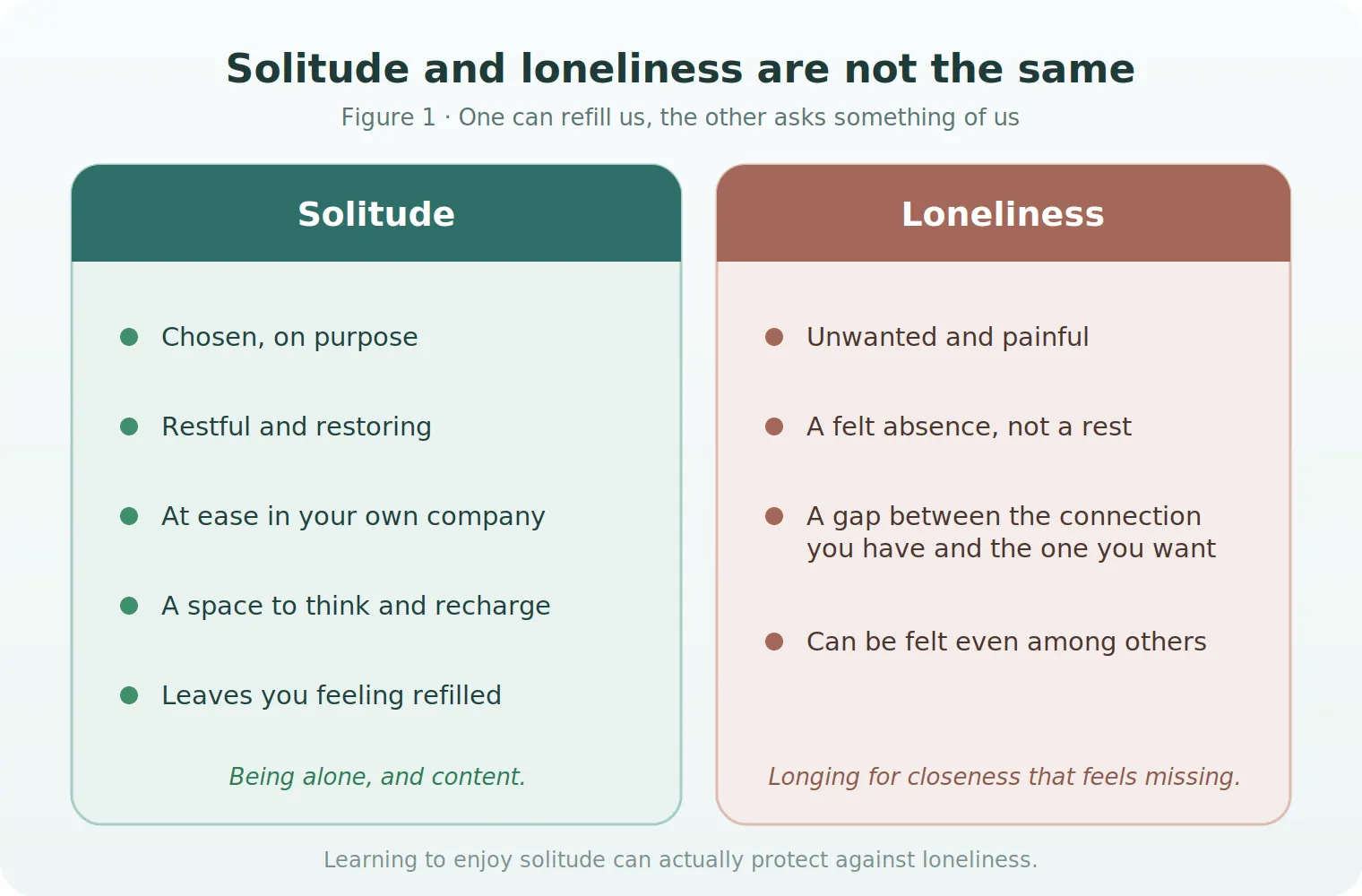
Figure 1. Solitude and loneliness are not the same. One can refill us; the other asks something of us.
Loneliness is a signal
Why does loneliness hurt so much? One influential evolutionary account suggests that it hurts because social disconnection once carried serious survival costs. The psychologist John Cacioppo described loneliness as a biological signal, shaped over a very long history in which belonging to a group was essential to staying alive (Cacioppo & Patrick, 2008). For our ancestors, becoming cut off from others was genuinely dangerous, so the mind developed an uncomfortable alarm to prompt reconnection, much as hunger prompts eating.
Understood this way, the pain of loneliness is not a sign that you are broken or unwanted. It is an ancient prompt, urging you toward the connection that human beings are built to need, and like any signal it is meant to be heard and acted upon.
Brain Insight: When loneliness becomes chronic, it can make the brain more alert to signs of social rejection, so that a neutral face or an unanswered message is read as proof that we are unwanted. This can quietly lead us to pull back, which deepens the very loneliness we long to escape. Simply knowing about this bias makes it a little easier to question it.
Why it matters
Taking loneliness seriously is not only about comfort. It genuinely affects our health. A large meta-analysis combining many studies found that loneliness and social isolation are associated with a meaningfully increased risk of early death, on a scale comparable to other well-established health risks (Holt-Lunstad et al., 2015).
This is not meant to frighten anyone who feels lonely, and loneliness is not a disease. It is simply a reason to treat our need for connection as a real part of health, as worthy of care and attention as sleep, movement or diet, rather than as a private weakness to be hidden.
Small ways to rebuild connection
If loneliness is a signal to reconnect, the encouraging news is that connection can often be rebuilt, and research offers useful guidance on how. In a meta-analysis of many programmes, interventions that addressed unhelpful social thoughts, such as the expectation of rejection, showed particularly promising results, though the quality and design of the underlying studies varied (Masi et al., 2011). This suggests that gently questioning the thought that others do not want us can matter as much as opportunity for contact.
In practice, this can mean reaching out to one person rather than waiting to be reached, and choosing depth over numbers, since a few close bonds matter more than many shallow ones. It can mean joining a shared activity where connection forms naturally, offering help or kindness to someone else, which quietly builds belonging, and gently challenging the lonely mind's assumption that we are unwelcome. Small, imperfect steps, repeated, tend to work better than waiting for one grand solution.
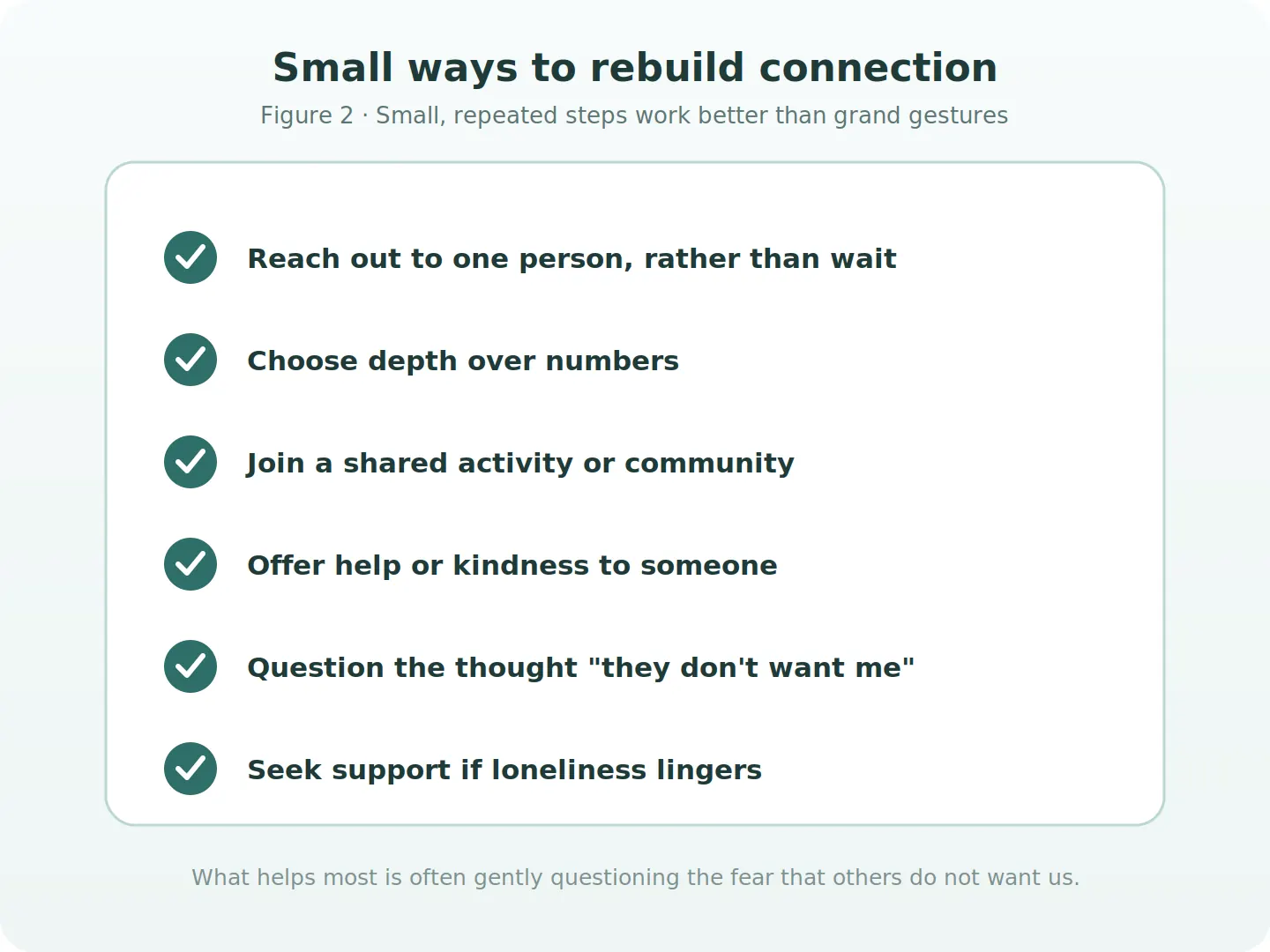
Figure 2. Connection is usually rebuilt through small, repeated steps, not grand gestures.
When to seek professional support
It is worth reaching out to a qualified professional when loneliness is persistent and painful despite your efforts, when it comes with low mood, hopelessness or a loss of interest in life, or when you find yourself withdrawing further and further from others. If you ever have thoughts of harming yourself, please do not wait for a routine appointment; seek immediate help through a crisis line or emergency service. Loneliness is common and very human, and there is no shame in seeking support to move through it. Sometimes a caring professional is exactly the first connection that helps the others become possible again.
The SADHNAM Perspective
Beneath the painful feeling of separation lies a deeper truth that many traditions have pointed to: that we are, in fact, profoundly connected to one another. Alongside practical steps to rebuild our bonds, gentle practices such as compassion for ourselves and others, mindful presence, and small acts of kindness can soften the sense of isolation and remind us of our belonging. At SADHNAM we see the answer to loneliness not only in adding more contacts, but in cultivating genuine connection, with others, with community, and with ourselves. These practices are meant to complement, and never to replace, professional support when loneliness becomes overwhelming.
A reflection from the Bhagavad Gita
सर्वभूतस्थमात्मानं सर्वभूतानि चात्मनि · Sarva-bhūta-stham ātmānaṁ sarva-bhūtāni cātmani (Excerpt from Bhagavad Gita 6.29)
This verse is often interpreted to describe one who comes to see the same self present in all beings, and all beings within the same self, a vision of deep underlying connection. It belongs to a spiritual and philosophical tradition rather than to psychological science, and it does not lessen the very real pain of loneliness. Yet its image of an underlying belonging, in which no one is truly separate, offers a complementary perspective that some may find comforting. Rather than presenting scripture as scientific evidence, we offer it here as a philosophical reflection that may bring solace.
A Moment of Practice
The two-minute SADHNAM exercise. A short practice you will find at the close of every article in this series. This week, one small act of reaching out.
- Bring to mind one person you have drifted from, or have been meaning to contact.
- Send them a small, low-pressure message today: a hello, a shared memory, or a simple I was thinking of you.
- If reaching out to a particular person feels too hard right now, step instead into a shared space, such as a walk, a class, a gathering or a place of worship, where connection can happen naturally.
- If a thought arises that says they will not want to hear from me, gently notice it, and set it aside as the loneliness speaking rather than the truth.
- Remember that connection often begins with one small, imperfect gesture rather than a perfect one.
This is not about forcing yourself to be endlessly social. It is about answering the signal of loneliness with one gentle, doable step toward another person.
Key messages
Key Messages
- Loneliness is a signal that we need connection, not a verdict on our worth.
- It is the felt gap between the closeness we have and the closeness we want.
- Solitude is chosen and can nourish us; loneliness is unwanted and painful.
- Loneliness affects health, so it deserves care rather than shame.
- Addressing the fear of rejection, alongside creating opportunities for genuine connection, may help reduce loneliness.
- Connection is rebuilt through small, repeated steps, and support is available when it lingers.
Questions for reflection
Take a quiet moment with these, with kindness toward yourself.
- When do I feel most lonely, and when do I feel most connected?
- Is there a difference, for me, between being alone and feeling lonely?
- What thoughts tend to hold me back from reaching out?
- Who is one person, or one place, I could take a small step toward this week?
References
Cacioppo, J. T., & Patrick, W. (2008). Loneliness: Human nature and the need for social connection. W. W. Norton.
Holt-Lunstad, J., Smith, T. B., Baker, M., Harris, T., & Stephenson, D. (2015). Loneliness and social isolation as risk factors for mortality: A meta-analytic review. Perspectives on Psychological Science, 10(2), 227–237. https://doi.org/10.1177/1745691614568352
Masi, C. M., Chen, H. Y., Hawkley, L. C., & Cacioppo, J. T. (2011). A meta-analysis of interventions to reduce loneliness. Personality and Social Psychology Review, 15(3), 219–266. https://doi.org/10.1177/1088868310377394
World Health Organization. (2023). Commission on Social Connection. https://www.who.int/groups/commission-on-social-connection
Further reading
For readers who wish to explore loneliness and connection through trusted sources:
- World Health Organization, Social isolation and loneliness. https://www.who.int/teams/social-determinants-of-health/demographic-change-and-healthy-ageing/social-isolation-and-loneliness
- Murthy, V. H. (2020). Together: The healing power of human connection in a sometimes lonely world. Harper Wave.
- Campaign to End Loneliness. https://www.campaigntoendloneliness.org
Disclaimer
This article is intended for general educational purposes only. It does not constitute a diagnosis, treatment, or a substitute for professional medical or psychological advice. If loneliness is weighing heavily on you, please consider reaching out to a trusted person or a qualified professional. For personal guidance shaped around your own situation, you can book a consultation through SADHNAM.
If loneliness comes with severe distress, hopelessness, or any thoughts of harming yourself, please seek immediate support from a qualified mental health professional or your local emergency services, or contact a mental health helpline such as Tele MANA