
Grief is one of the most universal of human experiences, and one of the most misunderstood. We often treat it as a problem to be solved on a fixed timetable, moving neatly through stages toward closure. This article offers a gentler and more accurate understanding, drawing on Stroebe and Schut's dual process model of how people actually cope with loss, the continuing bonds framework of Klass and colleagues, Bonanno's research on the varied paths of bereavement, and the reappraisal of the well known stage model. It explains why grief is not a straight line, why it comes in waves, why we do not have to let go in order to heal, and why there is no correct timeline. Overall, it suggests that grief is not a disorder to be cured but love that has lost its home, and that it can be carried, gently and in our own way, for as long as we need. Please note that this article touches on loss and may be tender to read.
Keywords: grief, bereavement, loss, dual process model, continuing bonds, mourning, wellbeing
Introduction
There is a reason grief hurts so much. It is the other side of love. We do not grieve what we did not care for, and so grief, in a sense, is the shape love takes when the one we loved is gone. As a well known saying puts it, grief is love with nowhere to go.
Perhaps because grief is so painful, we have surrounded it with unhelpful expectations: that it should follow tidy stages, arrive at closure, and be more or less finished within a respectable span of time. When our own grief refuses to behave this way, we can end up feeling that we are doing it wrong, on top of the sorrow itself. This article is an attempt to lift that second burden, and to offer a truer, kinder picture of what grief actually is and how people really move through it.
Grief is not a problem to fix
It helps to begin by saying clearly that grief is usually a natural response to loss, not a mental disorder. Although it is one of the most painful experiences a person can have, in most cases it is not something that needs to be cured. It simply needs to be lived, and accompanied. For a minority, as we will see later, grief can become so prolonged and disabling that professional support is genuinely helpful, but that is the exception rather than the rule.
Grief can also follow many kinds of loss, not only a death. The end of a relationship, the loss of health, a home, a role or a way of life can all bring real grief. Wherever there was deep attachment, its loss asks something of us. Recognising this can help us be gentler with ourselves and with others whose losses might not look, from the outside, like obvious reasons to mourn.
The myth of the five stages
Many people believe that grief moves through five neat stages, denial, anger, bargaining, depression and acceptance. It is worth knowing where this idea came from. The stages were first described by Elisabeth Kübler-Ross to depict the emotional experience of people who were themselves dying, not those who were grieving a loss (Kübler-Ross, 1969), and they were never intended as a fixed sequence that every mourner must complete.
Research does not support the idea that grief unfolds in orderly steps. People move back and forth, skip so called stages, revisit them, or experience something else entirely. Believing in a required sequence can make a grieving person feel abnormal for not following it. There is no single right way to grieve, and no correct order in which to do it.
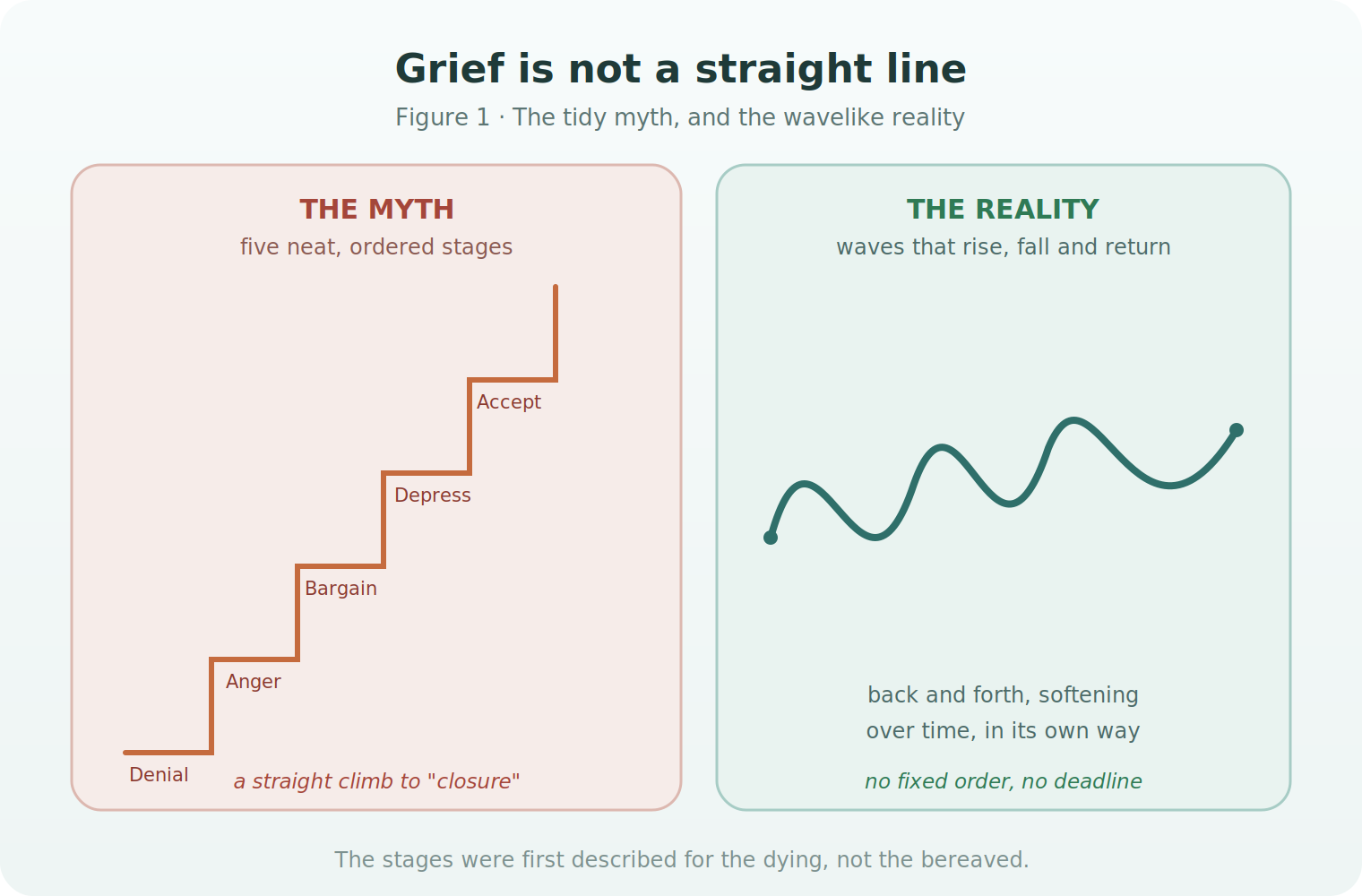
Figure 1. Grief is not a staircase to climb. It moves far more like waves.
Grief comes in waves
If grief is not a straight line, what does it actually look like? One of the most helpful and well supported descriptions comes from the dual process model developed by Margaret Stroebe and Henk Schut (Stroebe & Schut, 1999). They observed that grieving people naturally oscillate between two modes: at times turning toward the loss and its pain, and at other times turning toward the ongoing business of living, rebuilding and even finding moments of lightness.
Both of these are part of healthy grieving. Far from being avoidance, stepping back from the pain to rest, work or laugh is a necessary respite, a kind of pacing that lets us grieve in bearable doses. This is why grief so often arrives in waves, sometimes gentle, sometimes overwhelming, sometimes triggered by a song or a scent long after the loss. The waves do not mean you are moving backward. They are simply how grief moves.
Brain Insight
The brain forms deep expectations around the presence, routines and availability of the people we love. After a loss, those expectations take time to update, and each reminder that the person is gone is part of that slow updating. This is one reason grief returns in waves, and why it cannot simply be hurried along.
Continuing bonds: we do not have to let go
One of the most freeing shifts in our understanding of grief is the idea of continuing bonds. For a long time it was assumed that healthy mourning meant detaching from the person who died and eventually letting them go. Research and lived experience suggest otherwise (Klass, Silverman, & Nickman, 1996).
Many people heal not by severing the bond but by transforming it, carrying the person forward in memory, in values, in inner conversations, in the traditions and love they left behind. Talking to them, keeping a photograph, marking their birthday, living out something they taught us: these are not signs of being stuck. They are ways of keeping a relationship that has changed form but has not ended. We do not have to stop loving someone in order to heal. We only learn, slowly, to carry that love differently.
There is no correct timeline
Grief keeps no schedule. It does not politely conclude after a set number of weeks or months, and it is normal for waves to return on anniversaries, at milestones, or without any warning at all, even years later. Over time, for most people, grief tends to soften and to take up a different place in life, but softening is not the same as forgetting, and there is no deadline by which one must be done.
The research also shows that people vary widely in how they grieve. Studying bereavement, the psychologist George Bonanno found that many people are more resilient than we expect, gradually finding their footing, while others need more time and more support, and both paths are entirely human (Bonanno, 2004). Culture, faith and personality all shape how mourning looks. Your grief is allowed to take the time and the form that it takes.
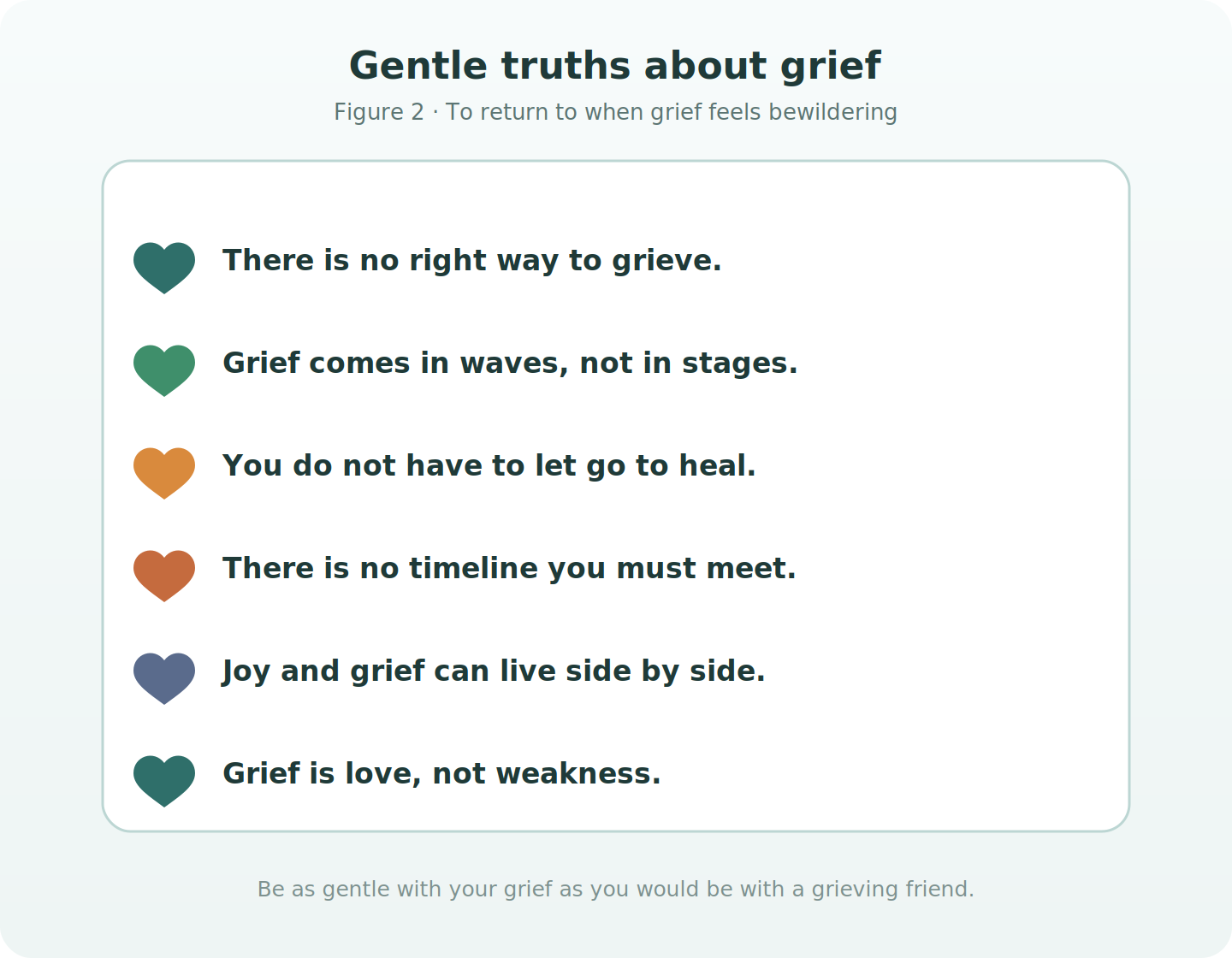
Figure 2. A few gentle truths to return to when grief feels bewildering.
When grief may need extra support
Because grief is natural, most people move through it with the support of the people around them and do not need treatment. Sometimes, though, grief remains so intense and disabling that it does not begin to soften over a long period, and daily life stays on hold. When such persistent, severely impairing grief continues, it is now recognised in current diagnostic systems as prolonged grief disorder, and specialised support can genuinely help (American Psychiatric Association, 2022). The exact criteria, including how much time must pass, vary between diagnostic systems and are best assessed by a professional.
It is worth reaching out to a qualified professional if grief feels stuck and unrelenting many months after the loss, if you are unable to function in daily life, if you are withdrawing entirely from others, or if you have any thoughts of harming yourself. Seeking help does not mean you are grieving wrongly or loving any less. It means you deserve support to carry what is heavy.
The SADHNAM Perspective
Grief, in the end, is a form of love, and it asks to be honoured rather than hurried. Alongside understanding and, where needed, professional support, gentle practices such as remembrance, mindful presence with our feelings, and rituals of love can help us hold both the sorrow and the sweetness of what we have lost. At SADHNAM we believe grief is not a sign that something has gone wrong with us, but a measure of how deeply we have loved, and that it can be carried with tenderness for as long as it stays. These practices are meant to complement, and never to replace, professional care when grief becomes overwhelming.
A reflection from the Bhagavad Gita
वासांसि जीर्णानि यथा विहाय · Vāsāṁsi jīrṇāni yathā vihāya (Bhagavad Gita 2.22)
This verse is often interpreted through the image of the soul leaving the body as a person sets aside worn out clothes, pointing to a continuity that endures beyond the physical. It belongs to a spiritual and philosophical tradition rather than to psychological science, and it is not meant to suggest that one should not grieve, or to lessen the very real pain of loss. For those who hold such a view, its image of continuity may bring comfort, while fully honouring the sorrow of parting. Rather than presenting scripture as scientific evidence, we offer it here as a philosophical reflection that some may find sustaining.
A Moment of Practice
The two minute SADHNAM exercise. A short practice you will find at the close of every article in this series. This week, a small ritual of remembrance. Please go only as far as feels comforting.
- Find a quiet few minutes and bring gently to mind the person, relationship or part of life you have lost.
- If it feels right, write a short letter to them, or simply speak to them in your mind, telling them what you miss, what you are carrying, or something you never had the chance to say.
- You might light a candle, hold a photograph or a treasured object, or simply sit with the memory for a moment.
- There is nothing here to fix and nothing to finish. This is only a way of keeping the bond, and of letting your love have somewhere to go.
- When you are ready, take a slow breath and return gently to the present.
This is not about moving on or letting go. It is a small, tender way of staying connected to what still matters to you.
Key messages
Key Messages
- Grief is a natural response to loss and the other side of love, not an illness.
- The idea of five fixed stages is a myth; grief does not move in neat steps.
- Grieving comes in waves, oscillating between facing the loss and living on.
- Healing does not require letting go; we can carry a transformed bond forward.
- There is no correct timeline, and grief may soften without ever fully ending.
- Most grief needs support rather than treatment, but persistent, disabling grief deserves professional help.
Questions for reflection
Take a quiet moment with these, and only as far as feels gentle.
- What have I lost that I have not fully let myself grieve?
- How does my grief tend to come, and what helps me when the waves arrive?
- In what ways do I already carry those I have lost with me?
- What is one small, loving way I could honour a loss this week?
References
American Psychiatric Association. (2022). Diagnostic and statistical manual of mental disorders (5th ed., text rev.). https://doi.org/10.1176/appi.books.9780890425787
Bonanno, G. A. (2004). Loss, trauma, and human resilience: Have we underestimated the human capacity to thrive after extremely aversive events? American Psychologist, 59(1), 20–28. https://doi.org/10.1037/0003-066X.59.1.20
Klass, D., Silverman, P. R., & Nickman, S. L. (Eds.). (1996). Continuing bonds: New understandings of grief. Taylor & Francis.
Kübler-Ross, E. (1969). On death and dying. Macmillan.
Stroebe, M. S., & Schut, H. (1999). The dual process model of coping with bereavement: Rationale and description. Death Studies, 23(3), 197–224. https://doi.org/10.1080/074811899201046
Further reading
For readers who wish to explore grief through trusted sources:
- Bonanno, G. A. (2009). The other side of sadness: What the new science of bereavement tells us about life after loss. Basic Books.
- Cruse Bereavement Support. https://www.cruse.org.uk
- National Alliance for Grieving Children. https://childrengrieve.org
Disclaimer
This article is intended for general educational purposes only. It does not constitute a diagnosis, treatment, or a substitute for professional medical or psychological advice. If grief is affecting your wellbeing or feels unbearable, please consider speaking with a qualified professional. For personal guidance shaped around your own situation, you can book a consultation through SADHNAM.
If grief brings severe distress, or any thoughts of harming yourself, please seek immediate support from a qualified mental health professional or your local emergency services, or contact a mental health helpline such as Tele MANAS in India at 14416. You do not have to face this alone.
This article touches on loss and bereavement, which can be tender to read. If it brings up strong feelings, please be gentle with yourself, take a pause, and consider reaching out to someone you trust.