Many of us treat certain emotions as problems to be silenced, as though anger, fear or shame were faults in our character. This article reframes emotions as messengers, evolved signals that carry useful information about our needs, our values and our relationships. Drawing on the work of Darwin and Ekman on the adaptive nature of emotion, Damasio on the deep link between feeling and reasoning, LeDoux on the fear circuitry of the brain, and Barrett on how emotions are constructed, it explains why emotions arise and what happens inside the brain and body. It then looks at the messages behind five common emotions and reviews evidence based ways to handle them, including naming a feeling and reinterpreting a situation. Overall, it argues that emotions are best met not as enemies to suppress but as messengers to understand and be guided by.
Keywords: emotions, emotion regulation, affect labeling, reappraisal, amygdala, self awareness, mental wellbeing
Introduction
Imagine someone knocking at your door with a message you did not ask for. You can refuse to open it, but the message does not disappear. It waits, and often it knocks louder. Our emotions are a little like that messenger. Anger, fear, jealousy, guilt and shame can feel unwelcome, and our instinct is often to silence them or push them away. Yet each of them is carrying information about something that matters to us.
This article is about learning to read those messengers rather than fear them. We will look at what an emotion actually is, why it arises, what happens inside the brain and body, what five of the most difficult emotions are usually trying to tell us, and how to handle them in a way that is both honest and healthy.
What is an emotion, really?
In everyday language we sort emotions into good ones and bad ones, and we treat the bad ones as reactions to be controlled. But in psychology, an emotion is something far more purposeful. It is a rapid, whole body response that evolved to help us deal with situations that matter to our survival and wellbeing.
More than a century ago, Charles Darwin observed that emotional expressions appear across very different cultures, and even in animals, which suggested to him that emotions have deep evolutionary roots (Darwin, 1872). Building on this tradition, the psychologist Paul Ekman argued that human beings share a set of basic emotions, such as anger, fear, disgust, sadness, enjoyment and surprise, each with its own signal and its own function, shaped by evolution to handle fundamental tasks of life (Ekman, 1992).
Crucially, emotions are not the opposite of reason. The neuroscientist Antonio Damasio studied people who had damage to the emotional centres of the brain but whose logical abilities remained intact. Rather than becoming perfectly rational, they struggled badly with everyday decisions (Damasio, 1994). His conclusion was striking. Emotion is not the enemy of good judgement. It is part of it. An emotion, in this sense, is a fast and intelligent read on what a situation means for you.
What happens in the brain and body
When something happens to us, the brain appraises it with remarkable speed, often before we are consciously aware of it. The neuroscientist Joseph LeDoux showed that a small structure called the amygdala can trigger a fear response through a fast, direct route, before the slower thinking parts of the brain have fully caught up (LeDoux, 1996). This is why you can flinch at a shape on the path before you realise it is only a rope, not a snake.
At the same time, the body joins in. Heart rate, breathing, muscle tension and hormones all shift, giving each emotion its distinct physical feel. This is the same activation system we explored in the first article of this series.
The psychologist Lisa Feldman Barrett adds an important insight. The brain does not simply receive emotions ready made. It constructs them, combining sensations from the body with memory and context to decide what a feeling means (Barrett, 2017). Two things follow from this. First, the meaning we give to a bodily sensation helps shape the emotion we experience. Second, and hopefully, we can get better at telling our emotions apart, and that skill turns out to be one of the most useful in all of emotional life.
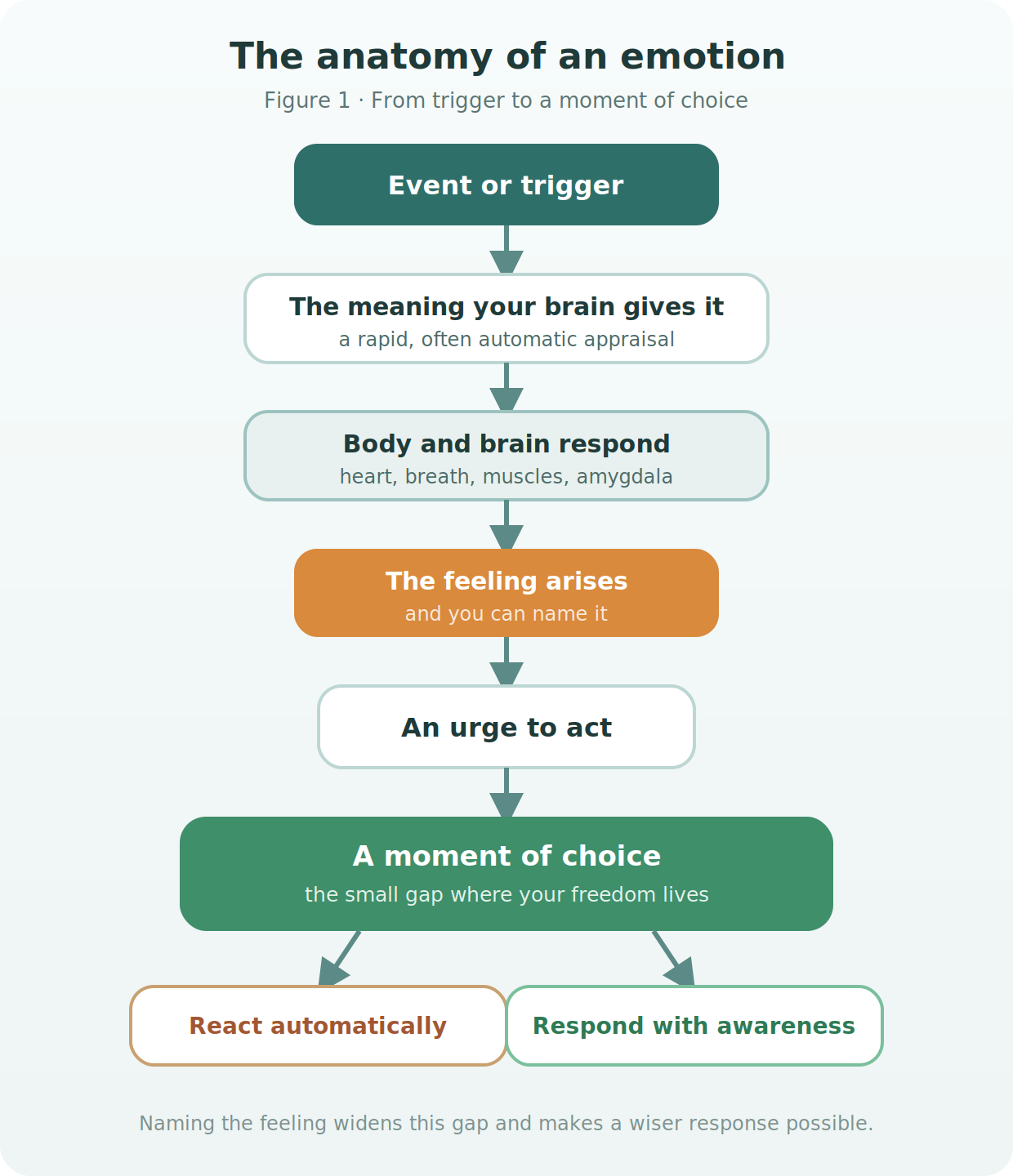
Figure 1. The anatomy of an emotion. Between the feeling and the action there is a small but real moment of choice.
Why there are no bad emotions, only uncomfortable ones
It is tempting to divide emotions into positive and negative, but a more useful distinction is between comfortable and uncomfortable. Every uncomfortable emotion has a job to do. Fear protects us from danger. Anger flags that something is unfair or that a limit has been crossed. Sadness slows us down and draws support from others. Guilt nudges us to repair a mistake.
The discomfort is not a flaw in the system. It is the very thing that makes us pay attention. And this is why simply suppressing an emotion rarely works. Silencing the messenger does not cancel the message. The knock only grows louder.
The messages behind five common emotions
Different emotions tend to carry different messages. What follows is not a rulebook, since context always matters, but a gentle guide to what these feelings often point towards.
Anger usually signals that a boundary or a value has been crossed, or that something feels unfair. Its message is that something important to you needs protecting or addressing. A healthy response is not aggression but clear, steady expression.
Fear signals a possible threat, whether real or imagined. Its message is to prepare, to protect, or to check whether the danger is actually present. Fear becomes a difficulty when the alarm keeps firing in situations that are genuinely safe.
Jealousy often points to something we value that feels at risk, or to a comparison that touches an old insecurity. Its message is a question worth asking honestly. What do I truly care about here, and what do I actually need?
Guilt tends to arise when an action does not match our own values. Its message is to consider repairing the harm or changing course. Healthy guilt is about behaviour, and it can guide us well.
Shame is different and more painful. It is the sense of being flawed or unworthy of connection. Where guilt says I did something bad, shame says I am bad. That message is often distorted, and it usually needs compassion and connection rather than hiding.
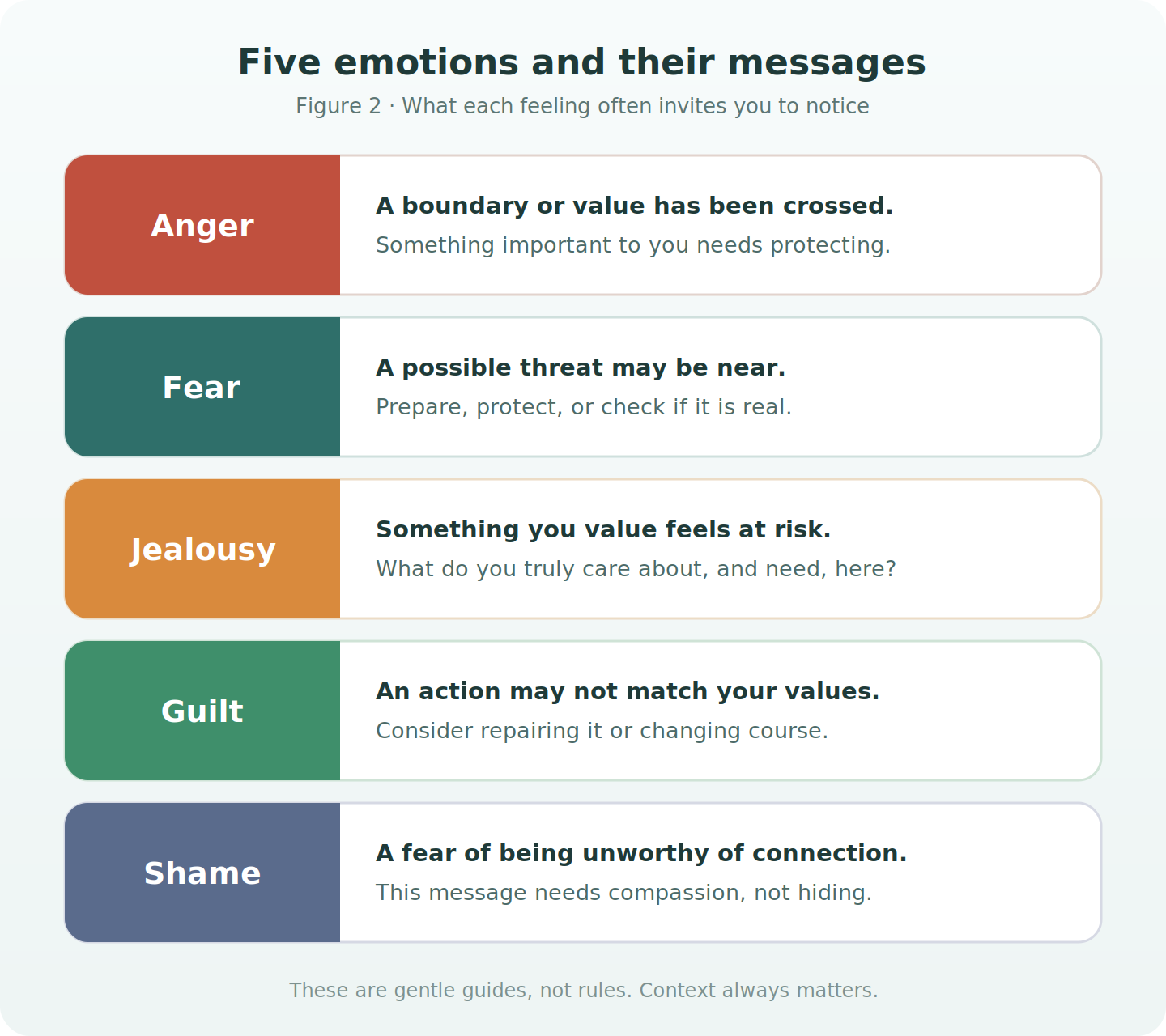
Figure 2. Five common emotions and the messages they tend to carry.
How to handle emotions in a healthy way
Reading the messenger is a skill, and like any skill it can be practised. Here are five approaches supported by research.
The first is to name the feeling. Putting an emotion into words appears to calm the brain's alarm. In a brain imaging study, simply labelling an emotion reduced activity in the amygdala and engaged the reasoning areas of the brain (Lieberman et al., 2007). This is the science behind the popular phrase, name it to tame it.
The second is to reinterpret rather than suppress. Researchers who study emotion regulation have found that people who habitually reframe a situation, seeing it in a new light, tend to enjoy better mood, relationships and wellbeing, while those who habitually push their feelings down tend to feel worse and connect less with others (Gross & John, 2003). The lesson is to change the meaning, not simply to muzzle the feeling.
The third is to allow the emotion to move through you. Emotions tend to rise and pass like waves. Letting a feeling be felt often allows it to soften, whereas fighting it can keep it stuck.
The fourth is to act on the message, not on the raw impulse. Between the feeling and the action there is a gap, and that gap is where your freedom lives. Ask what the emotion is telling you, and then choose a response that fits the person you want to be.
The fifth is to write it down. Studies of expressive writing have shown that putting emotional experiences on the page can improve psychological and even physical wellbeing (Pennebaker, 1997). This is exactly why a simple thought journal, offered at the close of this article, can be so quietly powerful.
When to seek professional support
Emotions deserve professional attention when they feel constantly overwhelming or far out of proportion to events, when they persist and begin to interfere with daily life, sleep, work or relationships, when anger, fear or shame lead to harm towards yourself or others, when you feel numb or cut off from feeling for long stretches of time, or when you notice any thoughts of harming yourself.
If any of this feels familiar, please reach out to a qualified mental health professional. Learning to understand your emotions with the support of a trained person is not a weakness. It is one of the wisest forms of self care there is.
The SADHNAM Perspective
Emotions can be seen as visitors, or as weather passing through an open sky. They arrive, they carry their message, and in time they move on. Alongside evidence based psychology, gentle practices such as mindful awareness, honest self observation and self compassion can help us greet these visitors with curiosity rather than fear, and to notice a feeling without being swept away by it. At SADHNAM we see this as the art of befriending one's own inner life. These practices are meant to complement, and never to replace, professional mental health care when it is needed.
A reflection from the Bhagavad Gita
"Matra-sparshas tu kaunteya" (Bhagavad Gita 2.14) This verse is often interpreted as a reminder that experiences of heat and cold, pleasure and pain, arrive and depart and do not last. It belongs to a spiritual and philosophical tradition rather than to psychological science, and it does not prove any modern theory. Yet its image of feelings as impermanent, as visitors that come and go, offers a complementary perspective that resonates with contemporary ideas about observing an emotion without clinging to it. Rather than presenting scripture as scientific evidence, we offer it here as a philosophical reflection that may enrich personal understanding.
A Moment of Practice
The two minute SADHNAM exercise. A short practice you will find at the close of every article in this series. This week, a thought journal.
- Take a page, or open a quiet notes app.
- Name the feeling in a single word, such as angry, afraid or ashamed.
- Without editing yourself, write down what happened just before it arrived.
- Then ask on the page: what is this emotion trying to tell me? What does it want me to protect, to change, or to notice?
- Write one small step, in line with your values, that you could take.
- Close the page. You have listened to the messenger, and that is enough for today.
This is not only a writing exercise. It is a small, steady act of listening to your own mind, which is where every kind of self understanding begins.
Key messages
Key Messages
- Emotions are messengers, not mistakes. Each one carries information.
- There are no bad emotions, only uncomfortable ones with a job to do.
- Naming a feeling helps calm the brain's alarm.
- Reinterpreting a situation supports wellbeing; suppressing feelings tends to harm it.
- Between the feeling and the action lies your freedom to choose.
- Persistent or overwhelming emotions deserve professional support, which is a strength.
Questions for reflection
Take a quiet moment with these. They are meant not to test you but to help you know your own mind a little better.
- Which emotion do I find hardest to allow myself to feel?
- When I felt something strongly this week, what was that emotion trying to tell me?
- Do I tend to reinterpret my feelings, or to push them down?
- What is one healthy way I can express what I feel?
References
Barrett, L. F. (2017). How emotions are made: The secret life of the brain. Houghton Mifflin Harcourt.
Damasio, A. R. (1994). Descartes' error: Emotion, reason, and the human brain. G. P. Putnam's Sons.
Darwin, C. (1872). The expression of the emotions in man and animals. John Murray.
Ekman, P. (1992). An argument for basic emotions. Cognition and Emotion, 6(3–4), 169–200. https://doi.org/10.1080/02699939208411068
Gross, J. J., & John, O. P. (2003). Individual differences in two emotion regulation processes: Implications for affect, relationships, and well-being. Journal of Personality and Social Psychology, 85(2), 348–362. https://doi.org/10.1037/0022-3514.85.2.348
LeDoux, J. (1996). The emotional brain: The mysterious underpinnings of emotional life. Simon & Schuster.
Lieberman, M. D., Eisenberger, N. I., Crockett, M. J., Tom, S. M., Pfeifer, J. H., & Way, B. M. (2007). Putting feelings into words: Affect labeling disrupts amygdala activity in response to affective stimuli. Psychological Science, 18(5), 421–428. https://doi.org/10.1111/j.1467-9280.2007.01916.x
Pennebaker, J. W. (1997). Writing about emotional experiences as a therapeutic process. Psychological Science, 8(3), 162–166. https://doi.org/10.1111/j.1467-9280.1997.tb00403.x
Further reading
For readers who wish to explore emotions and mental wellbeing through trusted public health sources:
- American Psychological Association, Emotion resources. https://www.apa.org/topics/emotion
- World Health Organization, Mental health. https://www.who.int/health-topics/mental-health
- National Institute of Mental Health, Caring for your mental health. https://www.nimh.nih.gov
Disclaimer
This article is intended for general educational purposes only. It does not constitute a diagnosis, treatment, or a substitute for professional medical or psychological advice. If difficult emotions are affecting your daily life, please consult a qualified mental health professional. For personal guidance shaped around your own situation, you can book a consultation through SADHNAM.
If you are experiencing persistent distress, panic attacks, severe depression, or any thoughts of harming yourself, please seek immediate support from a qualified mental health professional or your local emergency services. You do not have to face it alone.