Original text
आमलकी Āmalakī
Description
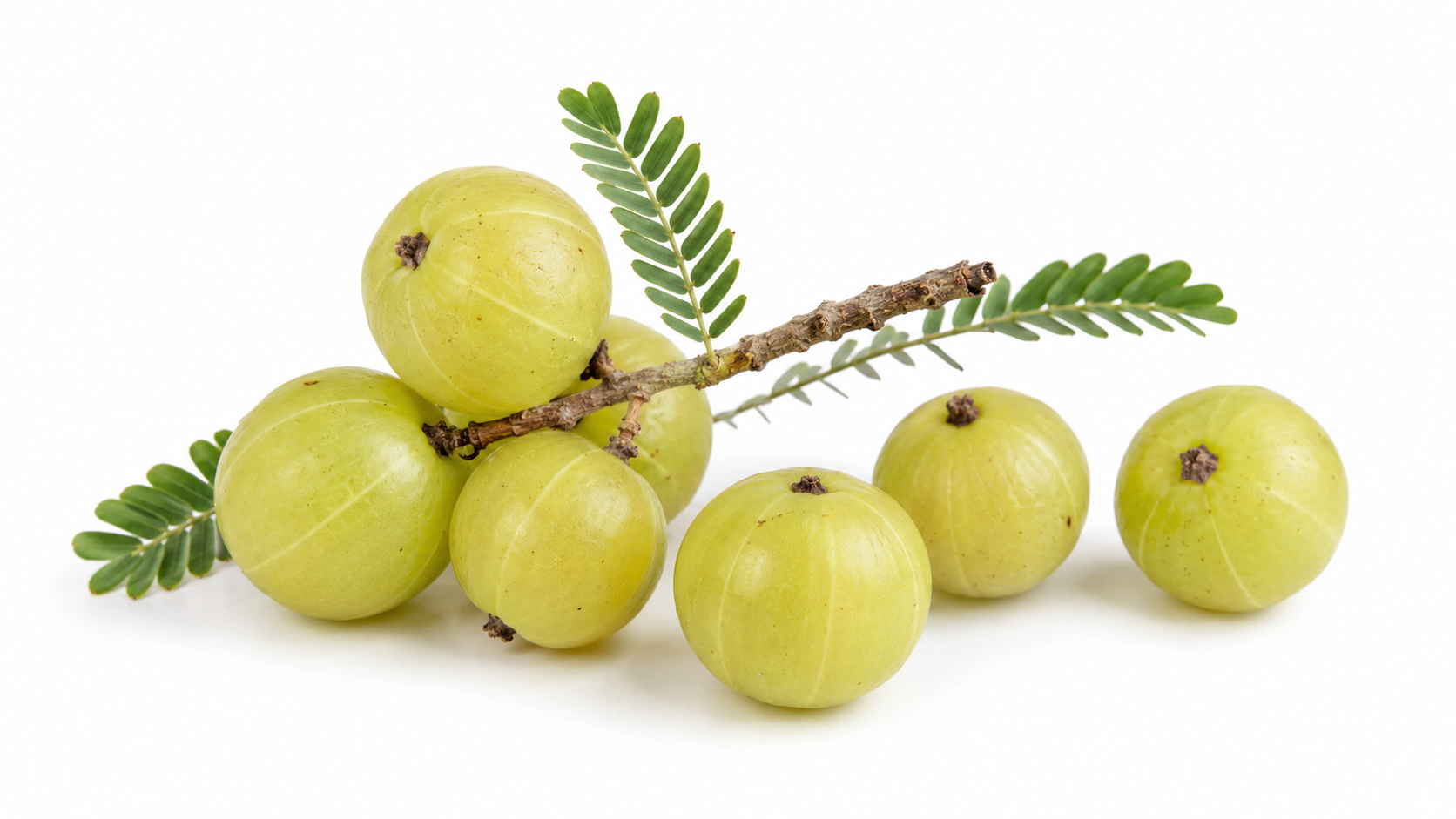
A small to medium deciduous tree bearing pale, translucent, six-furrowed sour fruits, known in Sanskrit also as Dhātrī, Amṛtā, Vayasthā, Amṛtaphalā, Śivā, and Tiṣyaphalā, and as āmvalā or aonla in Hindi. The fresh fruit is the part chiefly used, and it stands among the most valued of all Ayurvedic rasāyanas.
Traditional context
Āmalakī is valued above all as a rasāyana that nourishes and renews all the tissues, sustains youth, supports the eyes (cakṣuṣya), the hair (keśya), the voice (kaṇṭhya), and the heart (hṛdya), and is regarded as vṛṣya, a strengthener of vitality. Because it is cooling and sweet in its final effect, it is a leading remedy for pitta conditions such as dāha (burning), rakta-pitta (bleeding disorders), and amlapitta (hyperacidity), where its sour taste stimulates appetite without the sharp heat of the usual pungent digestives. Classical and pharmacopoeial sources also list prameha (the group of urinary and metabolic disorders including diabetes) among its uses, generally within broader physician-guided formulations rather than alone. It is taken as fresh juice, as dried fruit powder, in Triphalā, and in numerous rasāyana preparations.
Modern research
Āmalakī is among the most investigated of Ayurvedic fruits, and much of the work aligns with the rasāyana tradition. The fruit is exceptionally rich in vitamin C, and its hydrolysable tannins, chiefly emblicanin A and B along with gallic and ellagic acids, both stabilise the vitamin C and drive a strong antioxidant action. Studies report antioxidant, immunomodulatory, hepatoprotective, anti-inflammatory, and gastroprotective (anti-ulcer) effects, the last matching its traditional use in amlapitta. There is human as well as animal evidence, still limited in scale, for lipid-lowering (reduced total and LDL cholesterol) and for antihyperglycaemic activity, and preclinical work points to anticancer, hair-supporting (including 5-alpha-reductase inhibition), and adaptogenic effects. As with most herbal research, the larger, well-controlled clinical trials needed to confirm specific therapeutic claims remain relatively few.