Original text
Japā (जपा)
Description
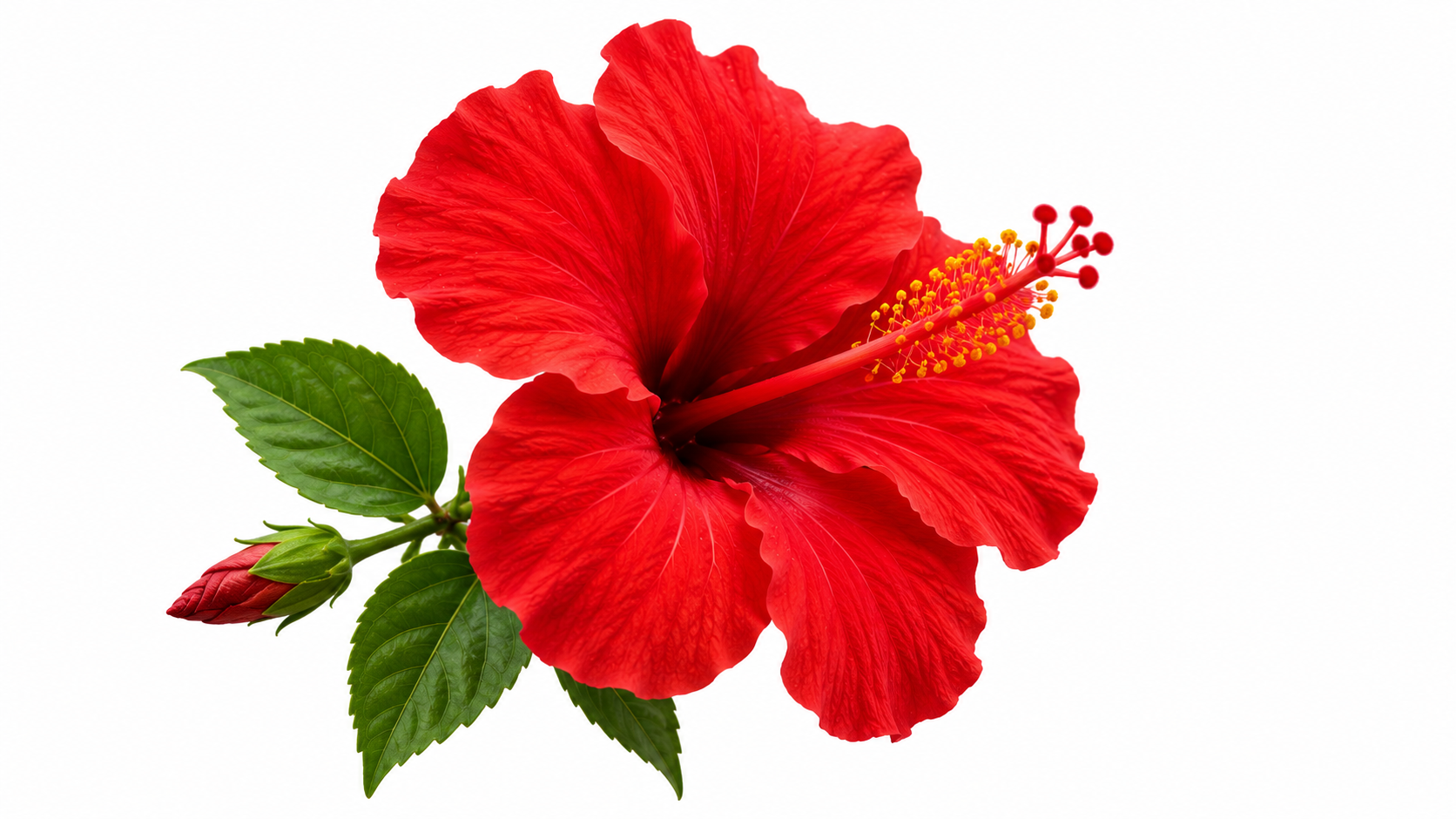
Japa (Hibiscus rosa-sinensis L.) is an evergreen flowering shrub of the family Malvaceae. In Ayurveda it is primarily valued for promoting healthy hair (keśya), checking excessive bodily discharges (saṁgrāhiṇī), and supporting conditions associated with aggravated pitta. Beyond its medicinal importance, the red hibiscus is revered throughout the Śākta tradition as the foremost flower offered to Goddess Kali and Durga.
Traditional context
Japā is best known as a keśya dravya, a promoter and darkener of the hair. A paste of the flower and tender leaves, or a taila prepared with them, is applied to the scalp to strengthen the roots, encourage growth, and check falling and premature greying, and it also serves against dandruff. Classical formulary works record such uses directly; for example, Vṛnda Mādhava describes a scalp paste of hibiscus flower with āmalakī and iron slag for palitya, premature greying. Beyond the hair, its actions are summarised as saṁgrāhiṇī (checking discharges), śoṇitasthāpana or raktastambhana (arresting bleeding), hṛdya (cordial), mūtra-saṁgrahaṇīya, and garbha-nirodhaka. Its cooling, astringent nature brings it into use for rakta-pitta and rakta-pradara, that is, conditions of bleeding and of excessive menstrual flow, and a cooling syrup of the flowers is taken in the hot season for thirst and heat. It is also applied to the skin for acne, blemishes, and minor wounds.
Modern research
Contemporary work supports several of the traditional claims, though with differing strength of evidence. The hair-promoting (keśya) action is the best studied: in a controlled study by Adhirajan and colleagues (Journal of Ethnopharmacology, 2003), petroleum-ether extracts of the leaf and flower applied to shaved rat skin lengthened the anagen phase and increased hair length and density, the leaf proving more potent than the flower, and later studies have repeated the finding. The garbha-nirodhaka action is also well supported: flower and root extracts show strong anti-implantation activity, along with anti-fertility and oestrogen-like effects, in animal models (for instance Batta and Santhakumari, 1970; Pal and colleagues, Contraception, 1985). Preliminary evidence suggests possible antidiabetic activity, and broader reviews report antioxidant, anti-inflammatory, cardioprotective, antipyretic, antimicrobial, and wound-healing effects, attributed largely to its anthocyanins (chiefly cyanidin) and flavonoids such as quercetin and kaempferol. Most of this evidence is preclinical, drawn from laboratory and animal studies, and well-designed human trials remain limited.