Original text
Bilva (बिल्व)
Description
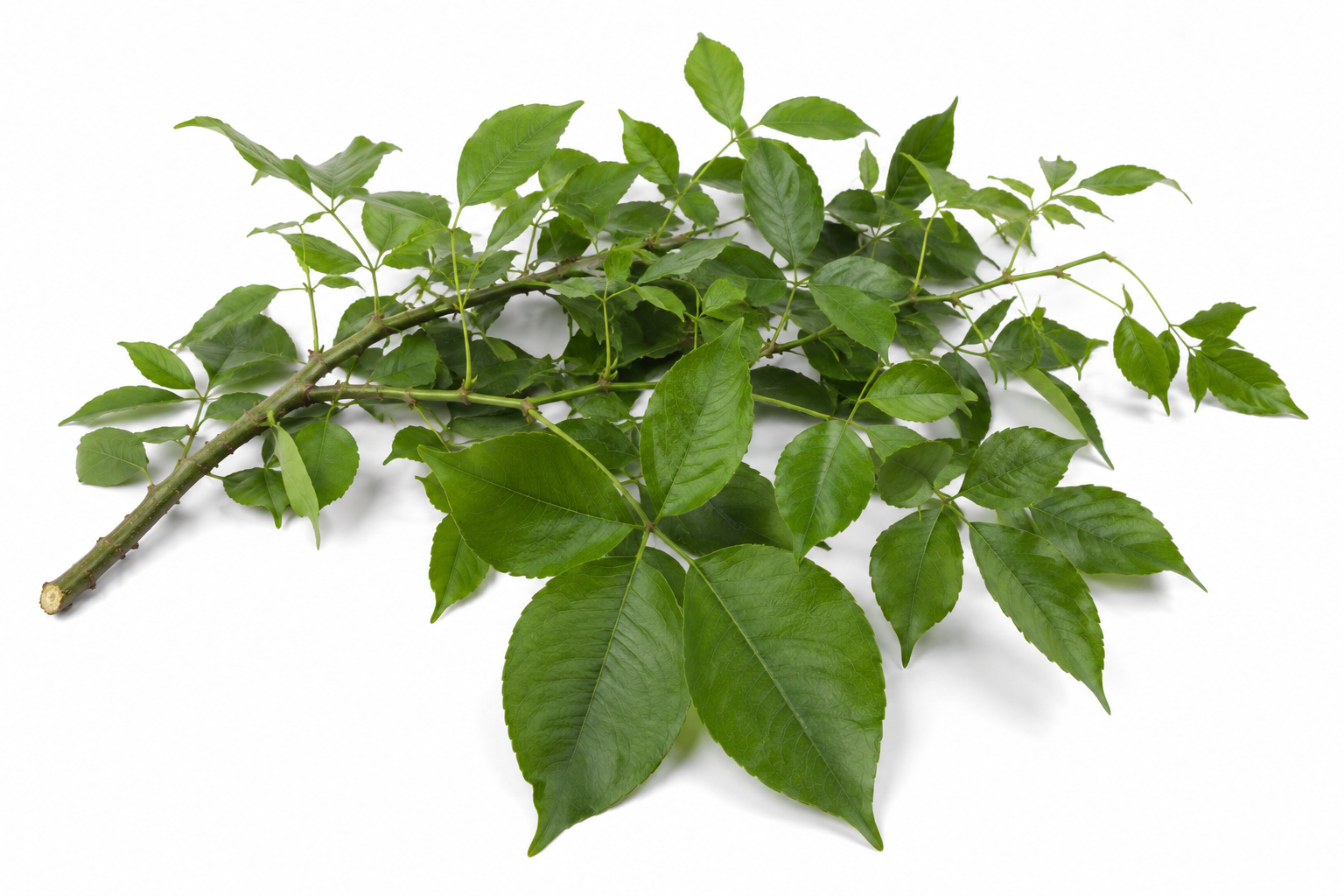
A medium-sized, thorny, deciduous tree of the citrus family, called in Sanskrit also Śrīphala, Śāṇḍilya, Śailūṣa, Mālūra, Sadāphala, and Śivadruma, and bel or belpatra in Hindi. Nearly every part is used; the medicinal worth lies chiefly in the unripe fruit and the root, while the trifoliate leaf serves in diabetes and is the foremost offering to Śiva.
Traditional context
Bilva is above all a remedy for the gut. The unripe fruit, dried into the pulp known as belagiri, is the classic treatment for atisāra, pravāhikā, and grahaṇī, that is, diarrhoea, dysentery, and the chronic bowel disorders, acting through its grāhi (absorbent, binding) and dīpana-pācana (digestion-kindling) properties. Cakradatta and Baṅgasena recommend it in chronic dysentery, loose motions, and piles. The ripe fruit, being heavy and mildly laxative, is taken instead as a cooling sharbat in the hot season for thirst and a burning stomach. The root belongs to the Daśamūla and carries its vāta-quieting, anti-inflammatory, and febrifuge action, while the fresh juice of the leaf has a long reputation in prameha (diabetes). Thus the same tree offers a binding fruit, a cooling drink, a vāta-quieting root, and a sugar-regulating leaf.
Modern research
Contemporary work supports several traditional claims, most directly the one concerning the gut. Controlled studies of the unripe fruit have demonstrated antidiarrhoeal activity and have identified effects on microbial adherence, invasion, and enterotoxin action (for instance Brijesh and colleagues, BMC Complementary and Alternative Medicine, 2009), lending scientific support to its grāhi use, although this is not yet definitive clinical proof. Extracts of the fruit and leaf also show gastroprotective and anti-ulcer activity, with the coumarin marmin implicated in protecting the stomach lining. Leaf extracts inhibit the digestive enzymes alpha-amylase and alpha-glucosidase and lower blood glucose in diabetic animals, matching the traditional use in prameha. Broader reviews report antioxidant, anti-inflammatory, antimicrobial, hepatoprotective, cardioprotective, and radioprotective effects, attributed to constituents such as the coumarins (marmelosin, imperatorin, marmin), the alkaloid aegeline, tannins, and flavonoids. Most of this evidence is preclinical, and well-designed human trials remain limited.